
Essay
On Frameworks In Consulting
A useful framework helps you manage scarcity, say no, find advantage, spot value, and scale what matters.
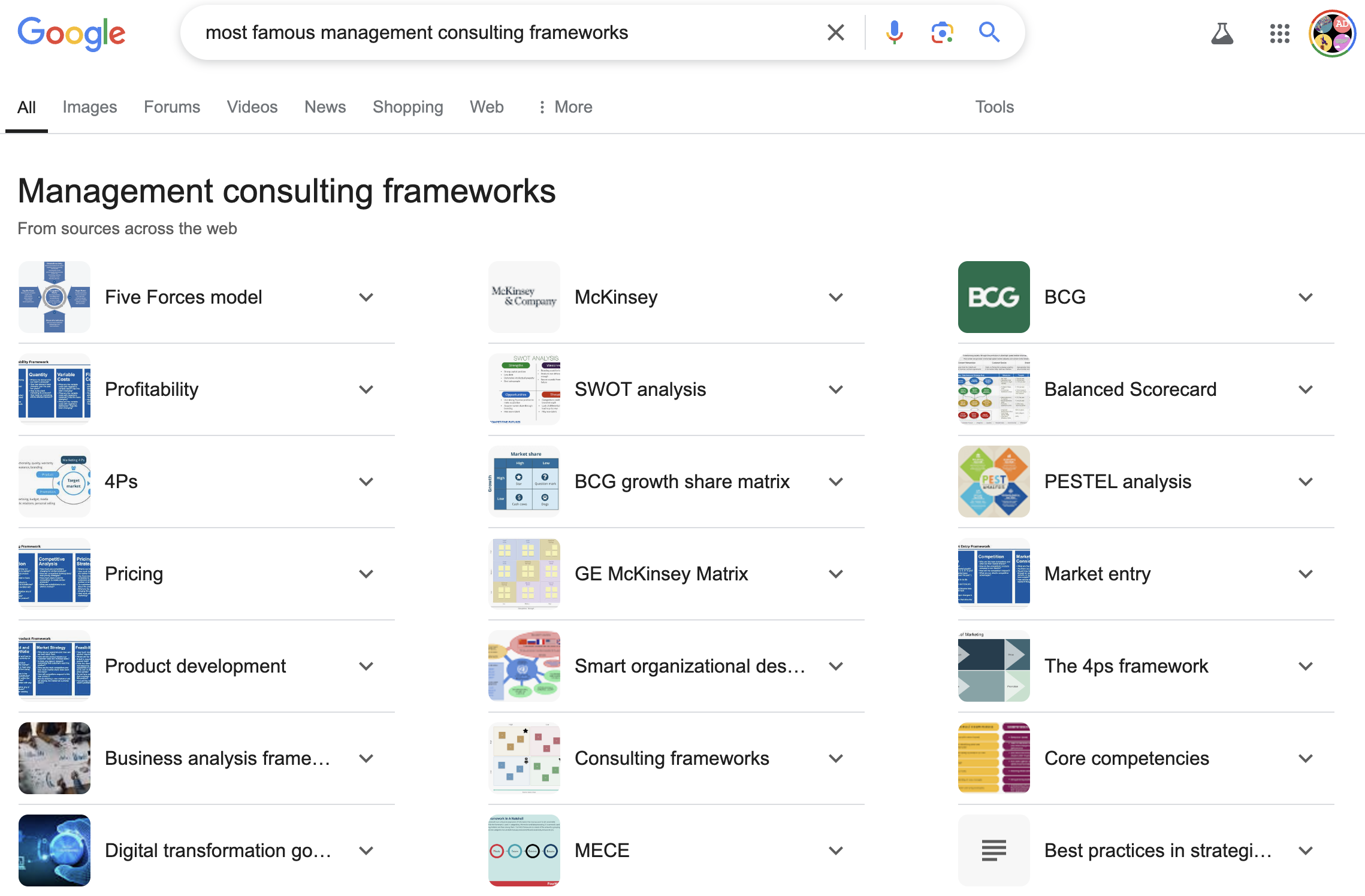
Let's talk about frameworks. You know those fancy diagrams consultants draw? I think they can actually be quite useful.
There are five things that make a framework useful: it should help you make the most of what is scarce, help you figure out when to say no, show you where you have an unfair advantage, help you spot what is valuable, and help you scale.
Remember the BCG matrix? It was popular in the 1980s because capital was scarce, and it helped companies figure out where to put their money. McKinsey's portfolio-of-initiatives style frameworks became useful later because capital was not as scarce as talent. It is always worth asking: what's really hard to get right now? What's stopping us from getting stuff done? Your framework should help you manage that constraint.
When Steve Jobs came back to Apple, he looked at 350 products and simplified them to four. Derek Sivers has the "Hell Yes or No" rule. Warren Buffett has the "10 punch card" idea. These are frameworks because they make it easier to say no.
Porter's Five Forces helps you examine where you might have an advantage. Jobs to Be Done helps you think about what people actually value. People don't value the drill, they value the hole in the wall. People don't value the course, they value the career change it enables.
Amazon's working-backwards process and Paul Graham's Default Alive or Default Dead are frameworks too. Done right, frameworks are not consultant theater. They are tools for thinking through hard problems with clarity.