
Essay
Choose Primitives Well
Complexity often comes from holding onto the wrong primitive long after reality has moved on.
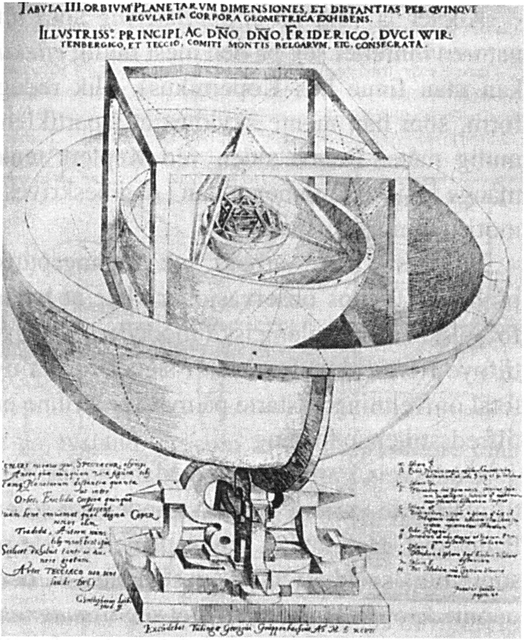
Think about the Greeks and their model of planetary orbits. They chose circles as their primitive because circles are simple and seemed perfect for the heavens.
For 1,500 years, no one questioned this fundamental choice. As astronomers gathered more data, they noticed that planets did not quite follow circular paths. Rather than reconsidering their primitive, they invented epicycles, circles within circles. It was a workaround based on a firm belief that a circle was the right primitive. The model grew messy and complicated.
Then came Johannes Kepler. He tried a different primitive: ellipses. With the sun at one focus, everything clicked. The planets' movements matched observations, and the epicycles vanished. The system went from convoluted to elegant just by changing the underlying primitive.
This pattern shows up constantly in systems where complexity has built up over time. We start with a primitive that seems right, then add layers of patches to make it keep working.
You can see the same thing in modern tech. The internet is built on hyperlinks, simple pointers from one page to another. Now we are dealing with an internet optimized for clicks. To solve this, in so far as it is a problem, we may need a new primitive. When people talk about the new internet, they often mean they are building on a different primitive.
If you are seeing a system growing more complex over time, with endless special cases and patches, it is likely time to find a new primitive.