
Timeline
The Turnaround
Between 1995 and 1998, Apple went from near-bankruptcy to one of the most decisive comebacks in business history. This is the sequence of decisions that turned the company around.
1995
August 24, 1995
Apple is in free fall.
Microsoft launches Windows 95. The Empire State Building is lit up in Microsoft's colors. The Rolling Stones' 'Start Me Up' plays in every TV spot. The PC market shifts to Microsoft almost overnight. Apple's market share, once in double digits, slides toward the low single digits. Inside Cupertino, the company is selling dozens of overlapping Mac models (Performa, Quadra, LC, Centris) with no plan for a modern operating system to run them on.
Steve Jobs Archive, 1995 context
1996
February 1996
BusinessWeek calls Apple “The Fall of an American Icon.”
Wall Street is asking the same question. By now everyone sees the same problems: too many product lines, a clone licensing program eating into margins, and no modern operating system in sight.
BusinessWeek, “The Fall Of An American Icon,” Feb 5 1996
August 1996
Apple kills Copland, its next-generation Mac OS.
Copland had been in development since 1994, meant to bring protected memory and preemptive multitasking to the Mac for the first time. After three years of delays and ballooning complexity, Apple's engineers concede they can't ship it. The cancellation leaves Apple with no future OS - and forces it to look outside the company.
Wikipedia, Copland
Late 1996
Apple tries to buy an operating system. BeOS talks fail. Enter Steve Jobs.
Apple offers around $125M to acquire Be Inc. and its BeOS. Be's CEO, former Apple executive Jean-Louis Gassée, holds out for roughly twice that. The talks collapse. Apple turns to NeXT, and back to the man who founded Apple in the first place.
Wikipedia, BeOS acquisition talks
December 20, 1996
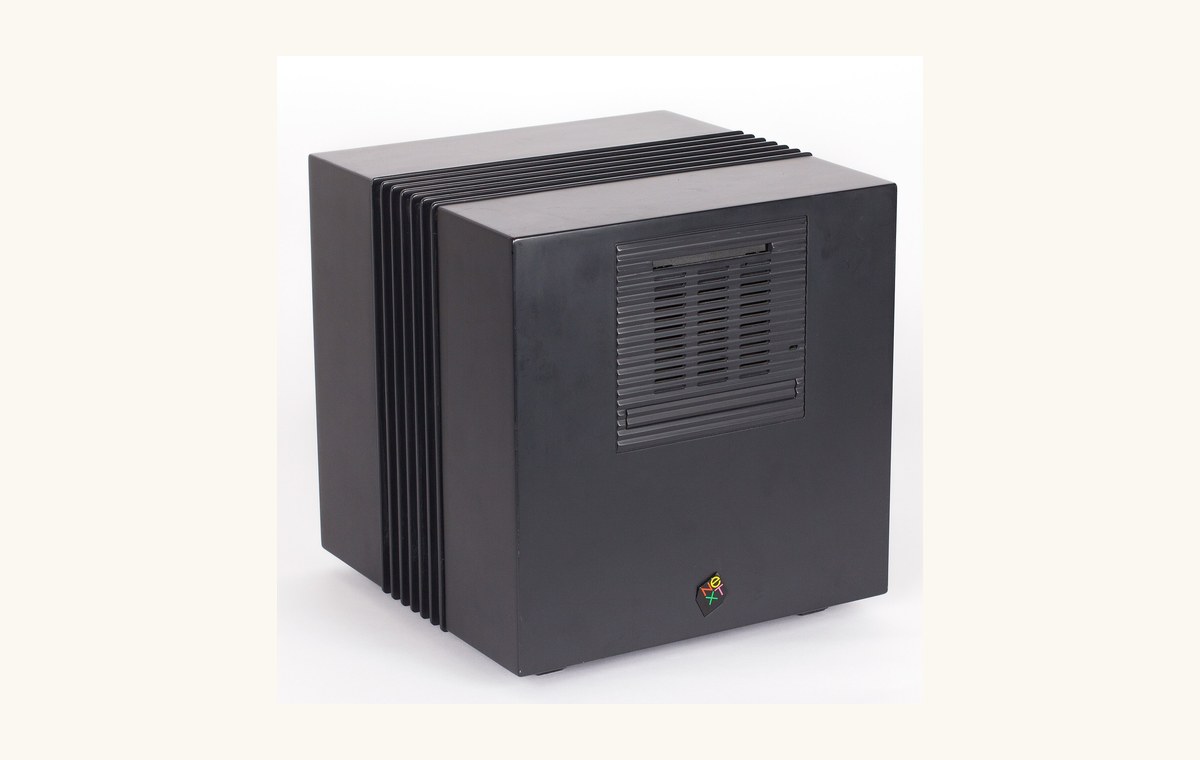
Apple acquires NeXT. The operating system problem is solved.
$429M in cash and stock. NeXT's software will become the foundation of Mac OS X - and of every Apple operating system after it. Twelve years after being forced out, Steve Jobs rejoins the company he co-founded.
Steve Jobs Archive, NeXT acquisition

December 20, 1996
Jobs returns to Apple as an adviser to Gil Amelio.
Part-time. No operating role, no title, no direct reports. Only access.
Steve Jobs Archive, Jobs returns as adviser
1997
February 4, 1997
The NeXT deal closes, bringing key leaders to Apple.
Avie Tevanian becomes head of software engineering. Jon Rubinstein becomes head of hardware engineering. Bertrand Serlet, Scott Forstall, and others from NeXT step into senior Apple roles.
Steve Jobs Archive, NeXT deal closes
March 14, 1997
Apple lays off 4,100 people - 31% of the company.
Under Amelio, Apple makes the largest layoff in its history. Whole product teams, redundant management layers, and middle-tier engineering groups are eliminated in a single day.
Wikipedia, Apple layoffs
April 16, 1997
Apple posts a $708M quarterly loss.
It's the largest quarterly loss in Apple's history. By the time the numbers are public, the board's confidence in Amelio is gone.
Wikipedia, 1997 Apple loss
May 13, 1997
Jobs tells developers: start with the customer experience.
At WWDC 1997, a developer challenges Jobs publicly about Apple's strategy. Jobs pauses, then answers: 'You've got to start with the customer experience and work backwards to the technology. Not the other way around.'
Steve Jobs Archive, WWDC 1997
1997
Apple tells the SEC that keeping NeXT's people is existential.
In a regulatory filing, Apple acknowledges the risk: if it can't integrate NeXT or retain its people, the value of the acquisition disappears.
Apple 10-Q, NeXT integration risk
June 27, 1997
Apple's cash falls from $1.56B to $1.10B in nine months.
In nine months, $460M in cash and short-term investments evaporates. At the current rate, Apple has less than two years of cash left.
Apple 10-Q, June 1997 cash
June 1997
Jobs sells a large block of his Apple shares.
Jobs sells nearly all of the 1.5 million Apple shares he received from the NeXT deal - at roughly $13 per share, close to the stock's bottom. The sale is widely read as a vote of no confidence.
Steve Jobs Archive, Jobs stock sale
July 4-6, 1997
Jobs orchestrates a boardroom coup.
Over the long Independence Day weekend, Jobs works the phones, calling directors one by one. Ed Woolard, the lead independent director, sides with him. By Monday the board has decided. By Wednesday it's public. Jobs has effectively taken over - without yet taking the title.
Apple press release, Amelio resignation
July 9, 1997
Gil Amelio resigns and Jobs' role expands.
Amelio's tenure ends after seventeen months. Apple announces a search for a new CEO. Jobs takes on an expanded advisory role - de facto running the company, still without the title.
Apple press release, CEO search
July 9, 1997
Jobs meets Jony Ive and sketches the 2x2 product grid.
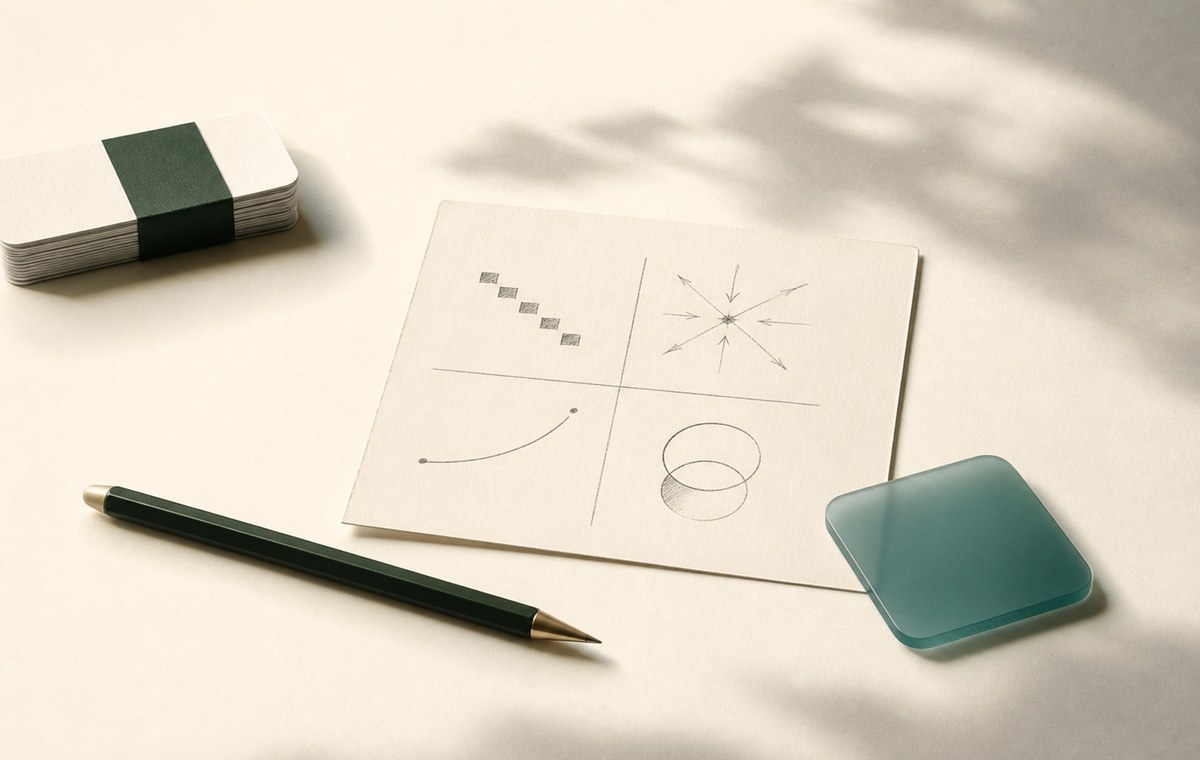
Jobs walks Apple's design studio and meets Jony Ive - Apple's head of industrial design at 30, dispirited and thinking about leaving. They click. On a whiteboard, Jobs draws a 2x2 grid: consumer and pro, desktop and portable. Apple will make four products. Everything else is a candidate for elimination.
Wikipedia, Jony Ive and product grid
July 26, 1997
Apple renames System 7.7 to Mac OS 8.
Apple's clone licensing program had let companies like Power Computing sell Mac clones, eating into Apple's hardware margins. The clone contracts only covered 'System 7.' By naming the next OS release Mac OS 8 instead of 7.7, Apple argues the contracts no longer apply - giving it a legal path out of the clone era and back to controlling who can ship the Mac OS.
Wikipedia, Mac OS 8 and clone licensing
August 6, 1997
Apple replaces all but two of its board members.
Only Mike Markkula and Ed Woolard remain. Joining them are Steve Jobs, Larry Ellison of Oracle, Bill Campbell of Intuit, Jerry York from Chrysler, and Gareth Chang from Hughes Electronics.
Apple 10-Q, August 1997 board changes
August 6, 1997
Apple and Microsoft sign a truce.
At Macworld Boston, Jobs announces a deal with Microsoft. Office and Internet Explorer will ship on Mac for the next five years. Apple bundles IE as the default browser. Patents are cross-licensed. Microsoft buys $150M in non-voting Apple stock. Apple's long-running lawsuit against Microsoft ends with the deal.
Microsoft announcement, Apple investment
August 1997
Jobs reframes the rivalry. For Apple to win, Microsoft doesn't have to lose.
When Bill Gates appears via satellite on the giant screen behind him, the audience boos. Jobs pushes back: 'We have to let go of the notion that for Apple to win, Microsoft has to lose.'
Steve Jobs Archive, Macworld Boston 1997
August 12, 1997
Jobs sends "A More Entrepreneurial Apple" to all employees.
It's a long, personal email. Jobs lays out the changes already made - new board, Microsoft deal, new advertising agency - and announces the operational reset coming this week.
Jobs employee email, Aug 12 1997
August 12, 1997
Apple reprices and re-grants employee options.
Existing employee options are repriced to current market value. A large new grant is added on top. After the reset, Apple employees collectively hold more than 20 million options. If the stock recovers, every employee profits.
Jobs employee email, Aug 12 1997
August 12, 1997
Apple makes severance the same for everyone.
Apple's many separate severance plans collapse into one. Executives no longer have richer terms than anyone else. The same plan applies whether you're a vice president or a customer service rep.
Jobs employee email, Aug 12 1997
August 12, 1997
Jobs ends sabbaticals: "all hands on deck."
Effective immediately. Jobs calls the sabbatical program expensive and out of step with how fast the industry now moves. Sabbaticals already booked will still happen. New ones won't.
Jobs employee email, Aug 12 1997
August 12, 1997
Jobs consolidates offices for "beehive effects."
Apple consolidates from six locations (excluding Infinite Loop) down to three. Jobs wants more chance encounters and faster decisions. He believes great products come from people running into each other in hallways, not from email.
Jobs employee email, Aug 12 1997
September 2, 1997
Apple kills the Mac clone market.
Apple buys Power Computing - the largest Mac clone maker - for around $100M and takes over its customers. The Mac OS license is not renewed for the remaining clone makers. Within months the clone market is gone.
Wired, Power Computing acquisition
September 16, 1997
Jobs becomes interim CEO (iCEO).
The board names Jobs interim CEO and continues searching for a permanent one. He keeps the 'interim' title for more than two years.
Apple press release, interim CEO
September 23, 1997
Jobs introduces Think Different internally.
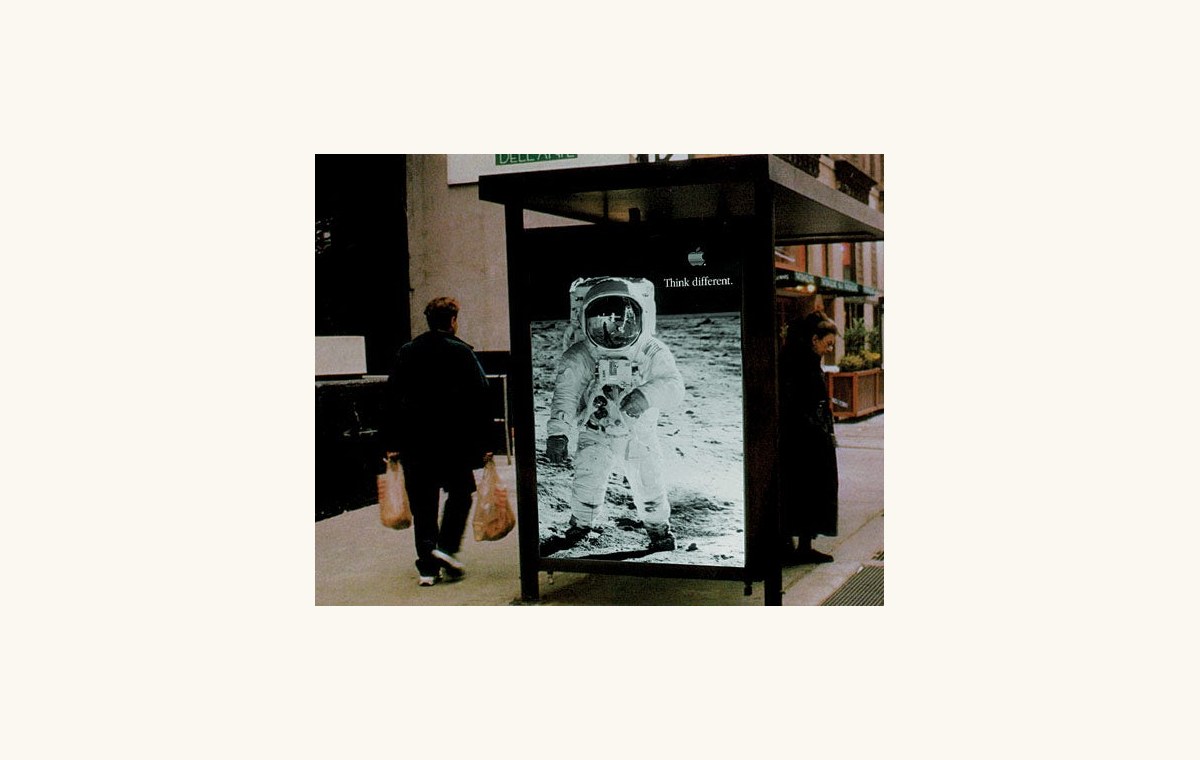
Jobs gathers Apple employees and presents the Think Different campaign before it runs publicly. Marketing isn't a layer on top of the product, he says - it's a way of declaring who Apple is and what it values. The campaign honors people who think different. The Apple products are absent from the ads.
Jobs employee talk, Think Different
September 1997
Think Different is launched.
The ads feature Einstein, Gandhi, Picasso, Edison, Muhammad Ali, and Hitchcock - none of them computers. The campaign wins an Emmy for Outstanding Commercial.
Steve Jobs Archive, Think Different campaign

October 6, 1997
Michael Dell says "I'd shut it down" about Apple. Jobs keeps the quote close.
Asked at a tech conference what he would do if he were running Apple, Michael Dell answers: 'I'd shut it down and give the money back to the shareholders.' Jobs takes the quote personally and keeps it within reach for years.
Wired recap, Michael Dell quote
November 10, 1997
Apple launches the online Apple Store and build-to-order sales.
At an event in Cupertino, Jobs introduces the new PowerPC G3 Macs and announces two operational shifts: a direct-to-consumer online store and build-to-order manufacturing. Both ideas come straight from Dell - the same Dell whose CEO had said a month earlier that Apple should be shut down.
Wired, Apple Store launch
Late 1997
Apple kills 70% of its products.
Printers (StyleWriter, ImageWriter), scanners, QuickTake cameras, the Pippin game console, OpenDoc, Cyberdog, eWorld, the Apple Network Server line, Performa and LC variants, A/UX, and dozens of Mac SKUs - all cut. Apple's engineering and marketing now focus on a small set of products it can make insanely great.
Wikipedia, Apple product-line cuts
December 19, 1997
Apple lets employees swap underwater options for new ones.
Apple offers employees a deal: hand in your old underwater options and receive a smaller number of new ones, priced at today's market value. By December the stock has recovered enough that the new options have real value. Most accept.
Apple filing, option exchange
December 27, 1997
Apple posts a $47M profit on $1.58B in sales.
Apple's first profitable quarter in over a year. The company is not yet healthy, but it is no longer bleeding.
Apple 10-Q, Dec 1997 quarter
1998
March 6, 1998
Jobs kills the Newton.
Jobs ends the Newton division and all future Newton-based products, including the MessagePad. A small group of devoted Newton users protests outside Apple's Cupertino headquarters with signs. Jobs presses ahead.
Jobs email, Newton decision
March 1998
Tim Cook joins Apple to rebuild operations.
Tim Cook leaves Compaq to join as SVP of Worldwide Operations. He met Jobs once and accepted within minutes. He'll reduce suppliers, cut inventory, and speed up execution.
Apple DEF 14A, Tim Cook bio
May 6, 1998
Jobs unveils the iMac.
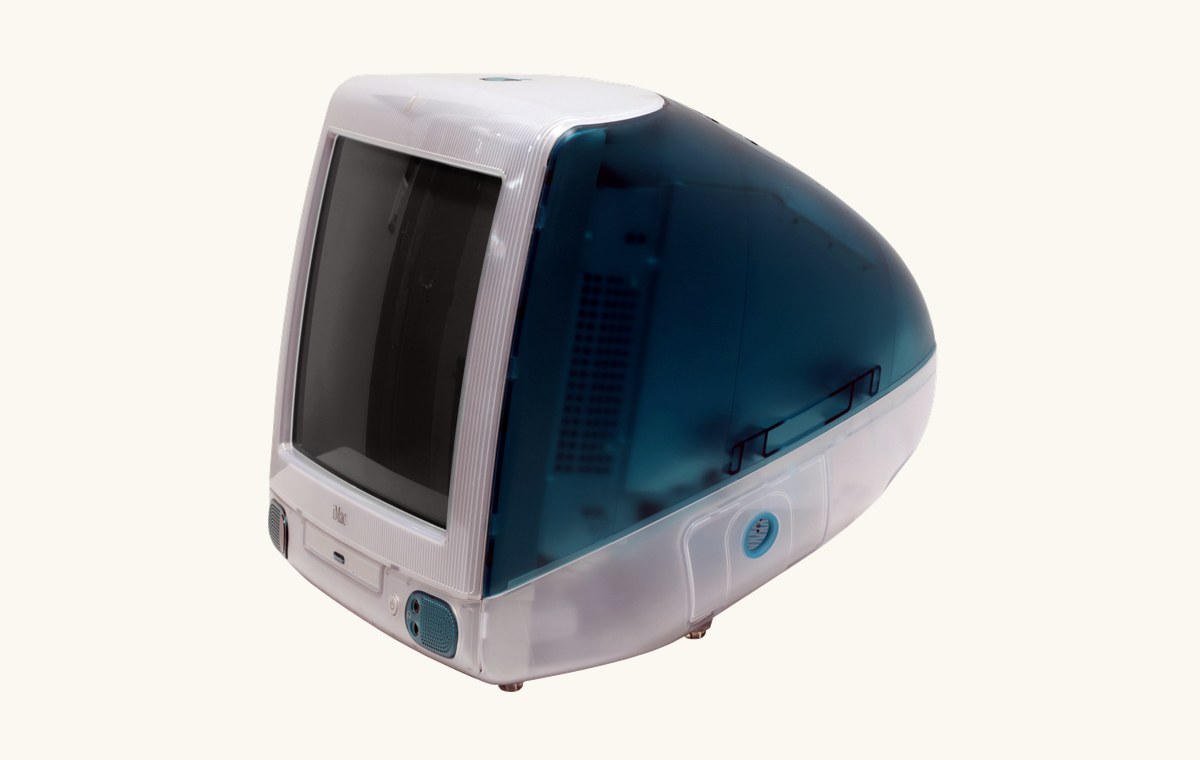
Bondi Blue, translucent, all-in-one. No floppy drive. USB instead of the proprietary ports the Mac had used for years. Priced at $1,299. The 'i' stands for internet.
Steve Jobs Archive, iMac unveiling
July 8, 1998
Jobs explains where the iMac fits.
At Macworld New York, Jobs pulls up Apple's 2x2 product grid. Three quadrants are filled. The consumer-desktop quadrant is empty. The iMac fills it.
Jobs keynote transcript, Macworld NY 1998
August 1998
The iMac ships.
On August 15, demand is heavy enough that retailers run out of stock on the first day. People line up.
Steve Jobs Archive, iMac shipment

August-September 1998
Apple sells 278,000 iMacs in six weeks.
About a third of the 278,000 buyers have never owned a Mac before. For the first time in years, Apple is winning new customers.
Wikipedia, iMac G3 sales
October 1998
Apple announces its first profitable year since 1995.
Apple closes its fiscal year with a $309M profit. The year before, the company lost over $1 billion.
Steve Jobs Archive, profitable year
December 23, 1998
Jobs tells employees: iMac is the #1 computer in the U.S.
Jobs emails employees with November market data. Apple's retail and mail-order share has doubled, from around 5% in August to roughly 10% by November.
Jobs employee email, Dec 23 1998
December 26, 1998
Apple posts a $152M profit on $1.71B in sales.
Apple's holiday-quarter profit is more than three times what it earned a year before.
Apple 10-Q, Dec 1998 quarter
December 26, 1998
Apple cuts inventory from 26 days to 2.
Two days - lower than Dell, the company whose CEO had said Apple should be shut down.
Apple 10-Q, Dec 1998 inventory
The numbers tell the answer.
Three years ago, BusinessWeek put Apple on its cover and asked whether the company could be saved. By December 1998, the question is closed.
Jobs email; Apple 10-Q, late 1998
The crisis was over.
Steve Jobs returned to a company that was bleeding cash, drowning in products, and running out of time. Two years later, the iMac was the best-selling computer in the country, and Apple was profitable again.
In roughly eighteen months Apple replaced its board, reset its incentives, killed most of its product line, brought in Tim Cook to run operations, and shipped the iMac - a product people actually wanted.
Steve Jobs Archive; Apple SEC filings
Primary sources are kept inline. The backbone is the Steve Jobs Archive and Apple's own filings.